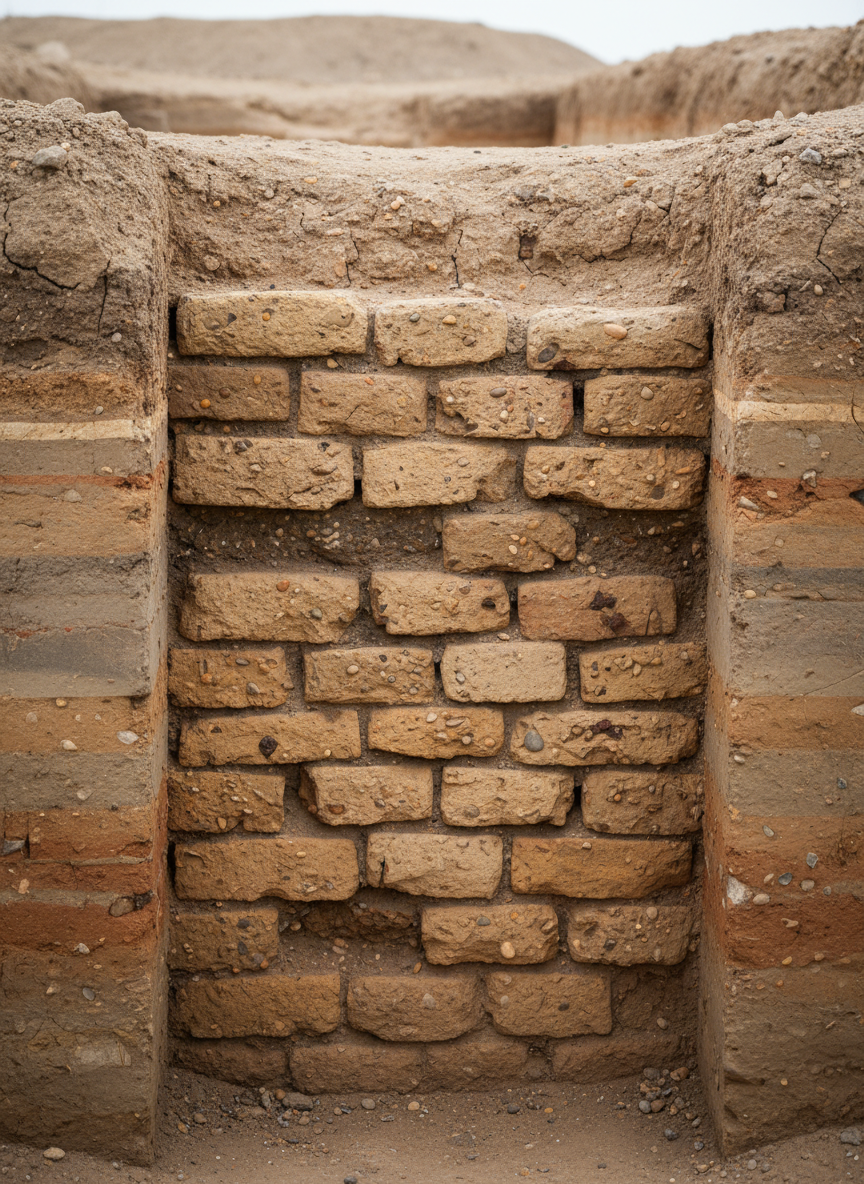
A close-up, photographic view of a partially excavated mudbrick wall at Tel Ashdod, the weathered bricks in shades of warm beige and reddish-brown stacked in a slightly irregular pattern. The surface shows crumbling edges, fine cracks, and embedded tiny pebbles, with a thin horizontal profile of darker soil marking an ancient occupation layer. The wall is framed by cleanly cut excavation balks of compacted earth on both sides, their stratigraphy visible as distinct horizontal color bands. Soft, diffused morning light from an overcast sky reduces harsh shadows and brings out subtle textures in the soil and brick surfaces. The camera is positioned at eye level with a moderate depth of field, keeping the wall in sharp focus while gently blurring the background. The mood is careful, methodical, and academic, highlighting the precision of archaeological work in a clean, professional style.

Field School

Explore how the Tel Ashdod field school blends excavation methods, safety protocols, and collaborative learning.

Methods

Each day begins with a safety briefing, then careful stratigraphic excavation, detailed locus recording, pottery washing, and digital documentation to preserve Tel Ashdod’s story responsibly.
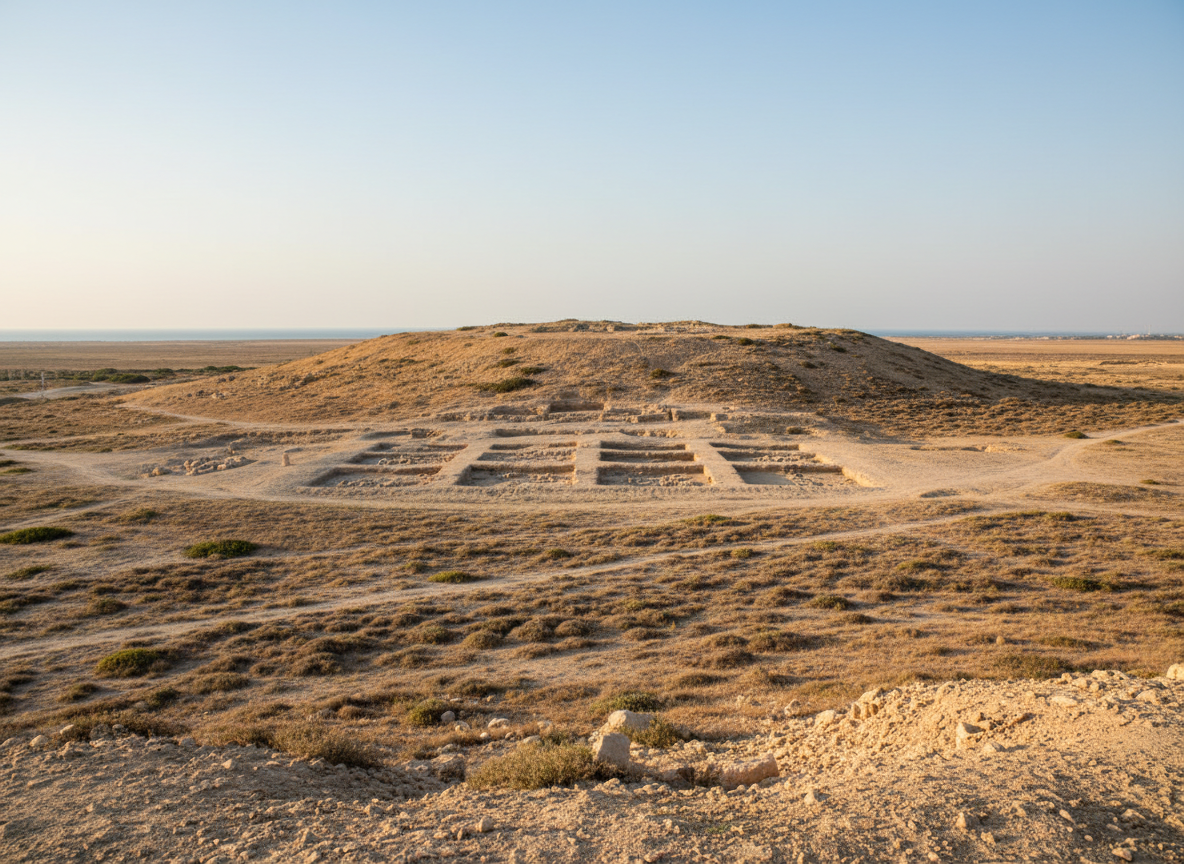
A wide, panoramic view of the Tel Ashdod archaeological mound captured in crisp photographic realism. The gently sloping tell rises from a dry, golden-brown coastal plain dotted with low scrub and exposed soil sections, revealing stratified earth layers. In the middle distance, carefully cut square excavation areas with neat balks create a subtle grid pattern in the earth, covered with pale dust and scattered stones. Late afternoon natural light casts long, soft shadows that emphasize the texture of the ground and the contour of the mound, while the sky is a clear, pale blue with a faint haze near the horizon. Shot from a slightly elevated angle with sharp focus throughout, the composition feels calm, professional, and documentary, conveying a sense of scale, history, and scientific observation without any human presence.

Apply Now

Share your details and interests to receive application materials, program dates, and funding information for upcoming Tel Ashdod excavation seasons.

← Back

Thank you for your response. ✨

Testimonials

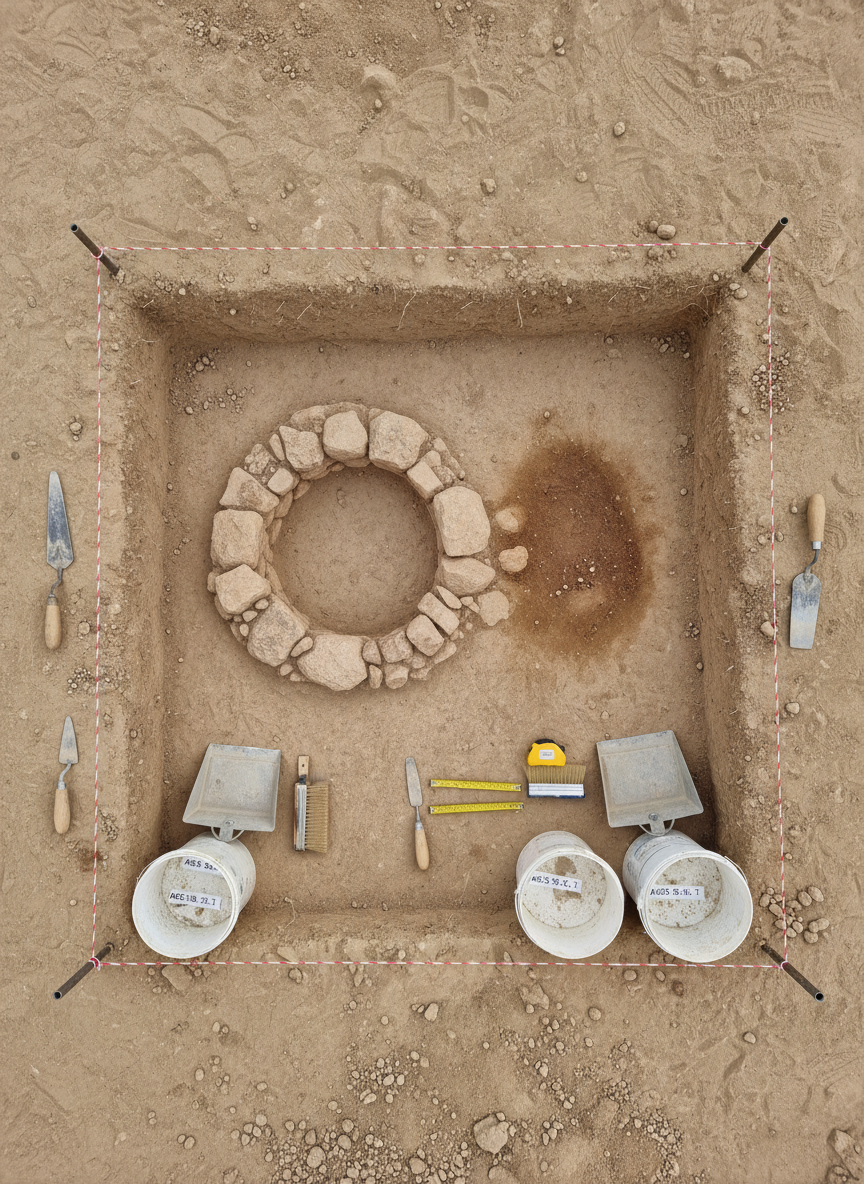
A detailed overhead photographic view of an active excavation square at Tel Ashdod, completely devoid of people but filled with tools and features. The square is defined by taut, bright string tied to metal stakes at each corner, forming a precise boundary over compacted, light-brown soil. Within the square, a shallow pit reveals a circular stone installation and a darker soil stain suggesting an ancient hearth. Around the edges lie neatly placed trowels, a small hand brush, a metal dustpan, a folded measuring tape, and labeled plastic buckets, their surfaces dusty from use. Soft, high midday natural light from a clear sky casts minimal shadows, ensuring every tool and soil variation is crisp and legible. The composition uses a bird’s eye view and sharp focus for a clear, documentary, educational mood that emphasizes careful field methodology.

Hope D.

Tel Ashdod transformed textbook history into real soil, tools, and questions; the field school reshaped my career path in Near Eastern archaeology.
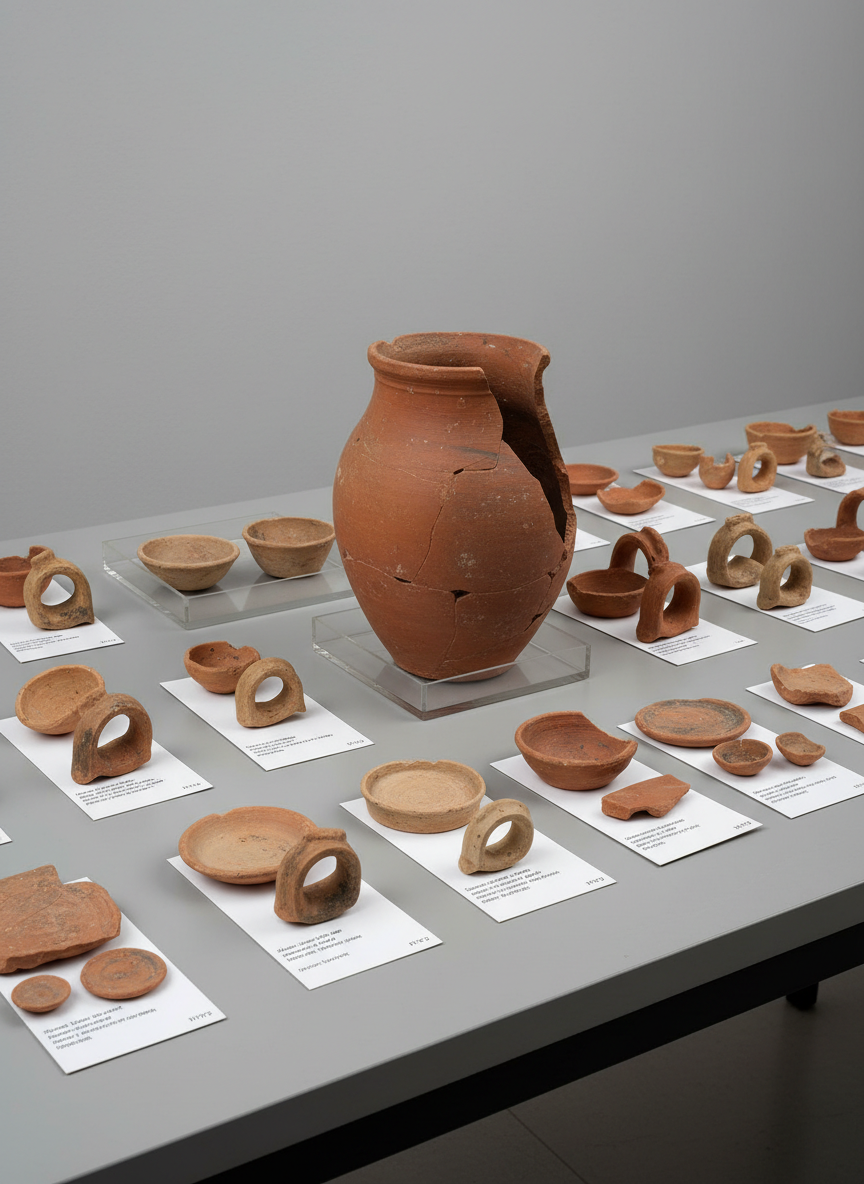
A meticulously arranged assemblage of excavated ceramics from Tel Ashdod displayed on a neutral grey archival table. The centerpiece is a large, reddish-brown storage jar profile with a clearly broken edge revealing its thickness, surrounded by smaller bowl rims, jug handles, and base sherds in varied clay tones from pale buff to deep terracotta. Each group rests on crisp white index cards and pale plastic trays, all free of text, aligned with careful spacing. Bright, even studio lighting from above eliminates harsh shadows, creating a clinical, museum-like clarity that emphasizes surface slips, incised decorations, and traces of soot or mineral deposits. Shot from a slightly elevated, three-quarter angle with sharp focus across the frame, the composition feels analytical and orderly, reflecting a professional research environment and the careful documentation of material culture.

Hope D.

Excavating at sunrise overlooking the coastal plain taught me more about stratigraphy and teamwork than any classroom lab could have offered.

A close-up, photographic view of a partially excavated mudbrick wall at Tel Ashdod, the weathered bricks in shades of warm beige and reddish-brown stacked in a slightly irregular pattern. The surface shows crumbling edges, fine cracks, and embedded tiny pebbles, with a thin horizontal profile of darker soil marking an ancient occupation layer. The wall is framed by cleanly cut excavation balks of compacted earth on both sides, their stratigraphy visible as distinct horizontal color bands. Soft, diffused morning light from an overcast sky reduces harsh shadows and brings out subtle textures in the soil and brick surfaces. The camera is positioned at eye level with a moderate depth of field, keeping the wall in sharp focus while gently blurring the background. The mood is careful, methodical, and academic, highlighting the precision of archaeological work in a clean, professional style.

Hope D.

Faculty mentors took time to explain every locus and pottery sherd, making complex archaeological reasoning feel accessible and incredibly exciting.

A wide, panoramic view of the Tel Ashdod archaeological mound captured in crisp photographic realism. The gently sloping tell rises from a dry, golden-brown coastal plain dotted with low scrub and exposed soil sections, revealing stratified earth layers. In the middle distance, carefully cut square excavation areas with neat balks create a subtle grid pattern in the earth, covered with pale dust and scattered stones. Late afternoon natural light casts long, soft shadows that emphasize the texture of the ground and the contour of the mound, while the sky is a clear, pale blue with a faint haze near the horizon. Shot from a slightly elevated angle with sharp focus throughout, the composition feels calm, professional, and documentary, conveying a sense of scale, history, and scientific observation without any human presence.

Hope D.

Living on site, sharing meals and data sessions, built a tight community that still collaborates on Tel Ashdod research today.